
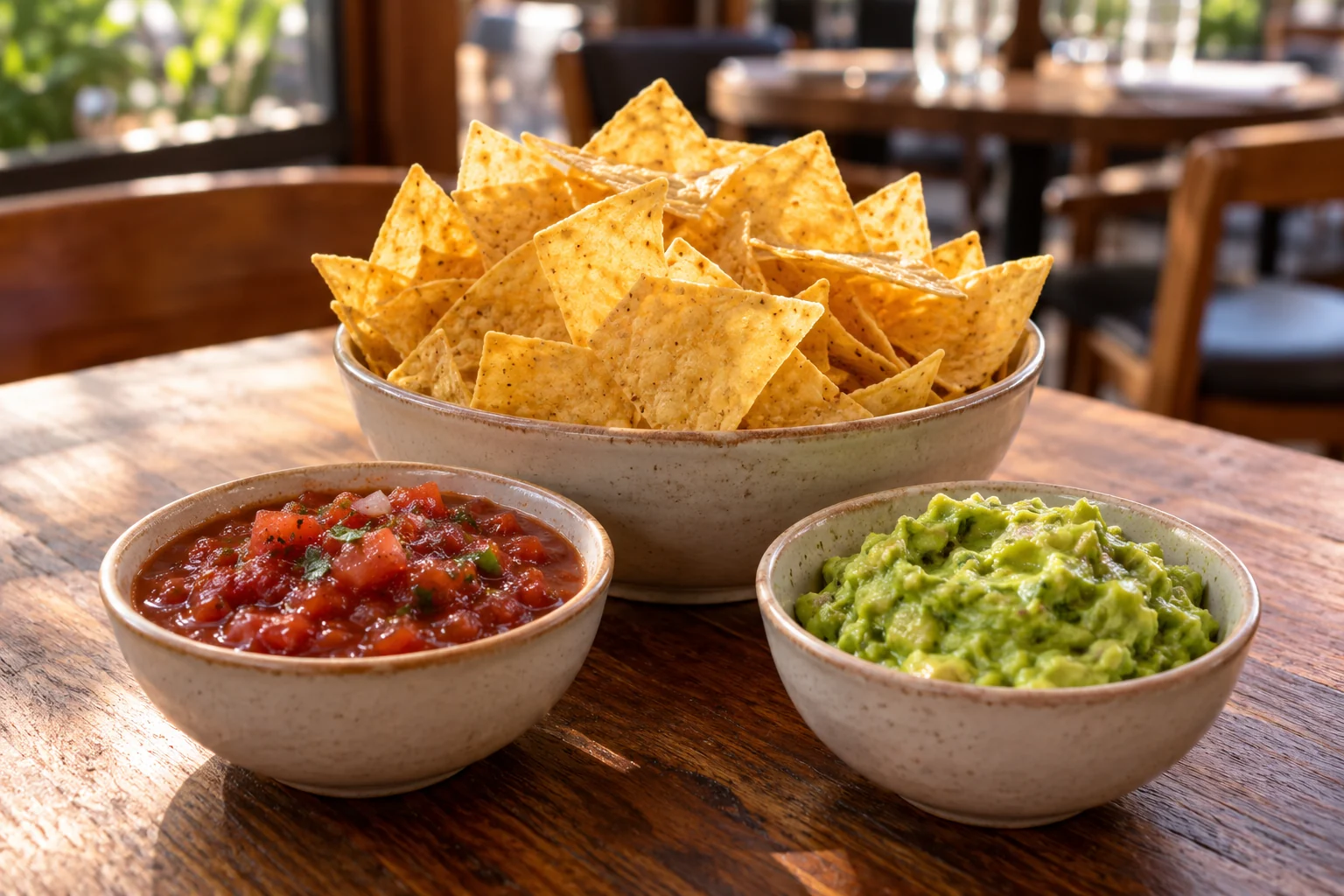
Begin with one service-ready portion
Do not start with an assumed number of portions per case. Plate the dish as it should reach the guest, weigh the chips and record that weight. Repeat the exercise with several portions so the team can see what the standard looks like in practice.
El Jefe Premium Nachos are made in Amsterdam with white corn from Mexico, and Green Acres supplies them as a 2 kg catering case. At an 80 g chip portion, 2,000 g divided by 80 g gives 25 theoretical portions. At 100 g, the same calculation gives 20. These figures are a starting point: actual yield is lower once you account for breakage, handling and any chips you decide are unsuitable for presentation.
Measure actual yield during service
Run a simple trial with one case or a clearly weighed quantity. Record the number of saleable portions, waste and remaining stock. Compare that result with the theoretical yield. The difference gives you a practical loss factor based on your own storage, handling and plating method.
Use the same scoop or weighed container at the pass, and add a photograph of the approved presentation to your kitchen notes. Consistency protects both the guest experience and the calculation behind the dish.
Cost the complete plate
The chip cost is only one line. Add cheese, protein or beans, salsa, guacamole, pickles, herbs, lime, dip pots and any other garnish included with the order. Include an allowance for preparation loss where it is relevant. For takeaway or room service, add the packaging used to keep wet and crisp elements separate.
Calculate with your current purchase prices and your own recipe quantities. Supplier prices, avocado yield and labour needs can change, so keep the date and source beside each figure. Review the calculation whenever the recipe, portion or purchase price changes.
Set the selling price from your own targets
Once the full ingredient and packaging cost is known, apply the food-cost percentage or gross-margin target used by your business. Remember that the final selling price may also need to cover labour, energy, delivery commission, service style and VAT. There is no single percentage that fits a bar snack, a hotel lounge plate and a room-service dish equally well.
Test the dish where guests will receive it
A dish that works at the pass may behave differently on a terrace or after a journey to a hotel room. Time the real route, check the final texture and presentation, and decide which moist components should travel separately. Update the recipe card when the test changes the plating method.
A short checklist for the recipe card
- Chip portion in grams
- Quantity and cost of every topping and dip
- Expected and measured portions per case
- Allowance for breakage and preparation loss
- Packaging cost for takeaway or room service
- Current selling price and review date
For dish ideas and presentation, read our El Jefe serving guide. You can also visit the El Jefe brand page or view the 2 kg catering case.
Operational guidance by Green Acres. Example yields are mathematical illustrations; use your measured portion and actual kitchen yield for commercial decisions.
